Showing posts with label NBTMV. Show all posts

Friday, June 8, 2012

Father of the Bride Speech at Daughter's Wedding

As the summer wedding season gets going, as the proud father of the bride, you may have to deliver a brief welcome speech at the reception. If so, here's my "father of the bride" speech for you to use as an example. This one is also an exception to the 3-minute rule for my NBTMV videos -- weighing in at almost 6 minutes, but you can't blame me for being long-winded; after all, this is my daughter's wedding and the first one at that!
Below is the speech as I had prepared it, but I spoke from memory, so the video does not match exactly, but it's always helpful to prepare (notice how short it is in print, yet it took almost 6 minutes to deliver the speech):

Good evening everyone. On behalf of my wife Leha and our family, we’d like to welcome friends and relatives of both families who are gathered here today to celebrate the marriage of Emily and Anran.
Thank you for taking time from your busy lives to join us on this evening, in some cases traveling quite a distance to be here. We hope you’ll enjoy the rest of the evening and remember this day fondly as we surely would.
I feel so proud today to be standing here as the father of the bride as she is looking beautiful with the man of her dream.
I remember as if it was only yesterday... when Emily was 4, she started to play children’s songs by ear on our piano and that’s when we decided to give her piano lessons when she turned 5.
The other thing I remember is how one day she announced that she wants to learn the violin when she was 9 and in elementary school. Despite discouragement from my wife who thinks the violin is much harder to learn than the piano, Emily’s progress was so impressive within 6 months of learning the violin that her mother was convinced that Emily would be able to play the violin after all. I remember her having violin lessons with Jody Gatwood and later taking her to Juilliard in NY city for violin lessons in her senior year. After year’s of chauffeuring to violin lessons and orchestra rehearsals, we were so happy when she got her driver’s license and could drive herself to her fellowship with the National Symphony Orchestra at the Kennedy Center. Emily is so good at everything -- from handicraft to cooking to math and science -- she got perfect score in math in both the SAT & GRE -- she could have been anything, but she chose music and the violin because she loves it.
You know, how some parents think no one is good enough for their daughter, it’s quite the opposite for us; we think Anran is great for Emily. He’s very considerate and thoughtful-- not to mention, extremely smart.

Emily and Anran have been friends since middle school and became best friends in college. With their love and friendship Emily and Anran can face anything that life may throw at them.
Traditionally, at this point, I should offer some advice on marriage, but you two have known each other and been together now for quite some time, so you don’t really need much advice on that front. The only practical advice I can think of is -- cook for the entire week during the weekend, live like you’re still a graduate student, and take vacations each year. That should see you through a long and happy married life.
Before I close, may I propose a toast to the most important couple tonight... if you’d please join me...
Ladies and Gentlemen, Emily and Anran -- here’s to a long and happy marriage!


P.S. As for father-daughter dance, we danced the "foxy" to the tune of "Rufus Wainwright-Across The Universe." Here's a video:


Tuesday, April 3, 2012

Visiting Lisbon, Portugal


We visited Lisbon, Portugal for a week in late February 2012 and enjoyed it very much. We rented an apartment and explored the city on our own. As usual, I started by buying a copy of Lisbon travel guide to figure out the layout of the city and then searched for apartments on VRBO.com near Rossio, which is one of the main areas of the city.

We found an apartment called Casa Travessa that was located a short walk up the hill near Rossio, the busy central plaza. The apartment served as a very convenient base from which to explore the great city of Lisbon. When we arrived on Saturday, we were greeted by Maria, a friend of the owners, Jordan and Deb Kleber, who happened to be away in Italy that week. Maria gave us the key and  took us on a very helpful tour of the neighborhood --  how to get down to Rossio, the restaurant street, metro station, Rossio train station, and tram stops, etc. We found a welcome basket with bread, cheese, fruits, and vinho verde (green wine) to get us started. We shopped in Pingo Doce for milk, bread etc for breakfast and light meals and the apartment served as a great base for our daily excursions. Jordan and Deb had also sent us helpful information about the neighborhood and restaurants.

Before I forget, here’s some helpful advice -- get a €5 "7 Colinas" card from the Casa da Sorte store on Rossio that's good for 24 hours of unlimited tram and metro rides (and refill it every morning, the first time, you’ll pay €0.50 extra for the card itself). If possible, go to Belém and museums on Sunday when it's free. If you plan to go to Sintra, check the days when the Pena Palace and National Palace are open.

We did all the usual sightseeing in Lisbon  -- on Sunday morning, after buying the “7 Colinas” card, we took Tram 15E to Belém to see the Belém tower, National Coach Museum, San Jeronimo monastery), had lunch at Os Jeronimos restaurant and coffee plus the famous Pasteis de Belém (called Pasteis de Nata elsewhere), and then took the metro to see the Gulbenkian musueum in the afternoon. We rode the famous Tram 28E many times from Martim Moniz park nearby all the way through Alfama and Bairro Alto. We got off the Tram 28E to see Castelo San Jorge (the castle), Miradoro St Luzia, and Sé cathedral. We also took the Elevador Gloria funicular up to Chiado, to see the city from up there and also taste port wine at Solar do Vinho do Porto.  One day we took metro to the Oriente station and visited Parque das Naciones. We spent nearly each afternoon walking the plaza in Rossio, then down Rua Augusta pedestrian street to Praca Comercio and back. We had coffee and Pasteis de Nata each afternoon. We liked the area around Rossio a lot.

We took a day trip to Sintra by train from the Rossio train station and another half-day trip by train to Cascais (from the Cais do Sodré station) to enjoy the beach. In Sintra we saw the Pena palace and walked around the city. We also had a good lunch at the GSpot Gastronomia restaurant near Sintra train station.

There are lots of good restaurants in Lisbon. We ate meals at the Bom Jardim (slowly roasted chicken with piri piri sauce) and Cafe Tighelina nearby, and took the ferry across Rio Tejo to Cacilhas for a seafood lunch at Farol restaurant (shrimp in garlic sauce, Bacalhau à Farol platter -- bacalhau is salted cod, very popular in Portugal). We also ate at a small restaurant near the Castle called Claras em Castelo that was quite good.

Tuesday, February 28, 2012

Assessing impact of using facial recognition technology


In a previous video I talked about the importance of assessing the impact of technology before adopting it. Today I want to talk to you about the impact of increased use of facial recognition technology. You may have already heard about the use of facial recognition technology to detect the mix of male and female customers at bars. Facial recognition technology is also used to identify people on the street or in a crowd.

Facial recognition is what is known as biometrics, which is identification of people from some features of their body such as fingerprint, iris pattern, or facial characteristics. No matter what biometrics we pick, if you stop and think about it for a moment, you would realize that your fingerprint or facial image does not come with your name stamped on it. Rather, somewhere in a computer system your facial image and your name are linked together. That linkage between your name and your facial image must be correct to begin with and the information must be stored securely.
Additionally, facial recognition systems are not error-free and there is a potential for misidentification.
So, as much as facial recognition is useful, it is not error-free. Therefore, you need some protection when the facial recognition technology misidentifies you as someone else. You need some way of correcting the mistake.
There is also the potential of someone trying to fool a facial recognition system by presenting, for example, a photograph or a video of you as your face. Something has to be done to detect such misuse and not accept a photograph as substitute for a face. It’s not easy to overcome this problem because facial recognition system identifies people from photographs or videos.
This means that if you are using facial recognition technology to identify customers or perhaps suspected criminals, you have to make sure that appropriate security precautions are in place to protect the linkage between a person’s facial image and their identity information and that the information is correct in the first place. You must also provide some sort of recourse when someone is misidentified.

Here's some more information to help you...
You may find my previous videos on technology impact assessment and biometric technology helpful:


NBTMV - On the need to assess impact of technology...

NBTMV on using biometric technologies to identify ...


Friday, February 17, 2012

How to lose weight - a story to motivate you


If you want to lose weight, here's a story to help and motivate you.

I always knew that good food with fewer calories and exercise are important to manage your weight, but when he was young did not follow this advice. My diet included lots of rice and very little exercise. So, over many years, bit by bit, I gained weight. When I was 44, my weight was over 200 pounds. Around this time, I had a stroke of good luck. My youngest daughter wanted to run in a 5K race and asked me to run with her. I agreed and started running on the treadmill to get ready for the race. Soon I was running five kilometers in less than 30 minutes ans was so proud that I could run five kilometers!

At the same time, I saw a TV show where a doctor discussed how to improve your diet. He said it is important to eat plenty of vegetables, fish and white meat. I changed my diet after watching that program. I substituted rice in my diet with green leafy vegetables. For breakfast and lunch I ate vegetable and chicken (or fish) soup. For dinner, I ate salads with fish and grilled salmon (but without any dressing). But I made sure that I ate the same volume of food as before, so I was not hungry even though I was eating salads instead of rice. By the way, I also started drinking black tea instead of coffee with milk and sugar.

So, overall, I made two changes at the same time: started doing more exercises and reduced the calorie intake (because the veggies had less calories than rice). The body responded by losing weight. Within a few weeks I lost over 30 pounds. I really liked this because I could see the results very soon. I could also continue the program of diet and exercise because I was not hungry. I really felt better than I ever felt before.

Even though I have been continuing this program since 2003, my weight has gone up some. Over the past eight years, I have gained weight about 8 pounds. But it’s still a great way to lose weight and manage your health. When I think why the weight has gone up despite maintaining about the same diet and exercise, all I can think is that the body has a mind of its own and it fights your attempts to lose weight.

If you are thinking about trying to lose weight, I recommend that you make two changes in your life: start an exercise program and change your diet by replacing carbohydrates with veggies. Stop eating too much rice or pasta and eat a lot of salads with fish (or chicken) but skip the dressing .Remember that to succeed you should eat the same amount of food as you ate before making these changes because it is very important to not be hungry. Good luck!


Here's some more information to help you...
You may find my previous video on weight loss helpful:
To lose weight, think of the human body as a syste...

Cómo perder peso


Si quieres perder el peso, aquí está una historia para ayudarte y motivarte.

Siempre sabía que buena alimentación con menos calorias y ejercicios eran importantes para manejar su peso, pero cuando era joven no seguía este consejo. Comía mucho arroz y hacía poco ejercicios. Así que, hace muchos años, poco a poco, me gané peso. Cuando tenía 44 años, pesaba más de 200 libras. Al rededor de este tiempo, fue una buena suerte que mi hija menor queria correr en una carrera de cinco kilometros y me pidió aue la acompañara. Estaba de acuerdo a correr con mi hija y empecé a correr en la cinta para estar listo. Muy pronto estaba corriendo cinco kilometros en menos que 30 minutos. Estaba orgulloso de poder correr bastante rapído como eso.

Al mismo tiempo, ví un programa de televisión donde un doctor discutió comó mejorar su dieta. Se dijo que es importante para comer muchas verduras, pescado, y carne blanco. Decidí cambiar mi dieta despues de ver ese programa. Sustituí arroz in mi dieta con verduras de hoja verde. Para el desayuno y para el almuerzo comía sopa de verduras y pollo. Para la cena, comía las verduras con pescado como el salmón a la parilla. Es como una ensalada sin aderoso. La comida tenía el mismo volumen como antes de cambiar la dieta. Asi que no tenía hambre a pesar de que comía verduras en lugar de arroz.

Así que hice dos cambios al mismo tiempo, hacer mas ejercicios y reducir las calorias de comidas. El cuerpo respondió con la perdida de peso. En unas semanas perdí más de 30 libras. Me gustó mucho porque pude ver los resultados en poco tiempo. Podía continuar el programa de dieta y ejercicio porque no tenía hambre. De verdad me sentía mejor que antes.

Aunque continuaba esta programa desde 2003 el peso se sube un poco. En los últimos ocho años el peso aumentó 7 u 8 libras. Sin embargo este ha sido un buen método para perder peso y manejar tu salud. Cuando pienso en porque el peso sube a pesar de las mismas dietas y ejercicios, creo que el cuerpo tiene una mente propia y lucha contra de bajar el peso.

Todavia si no trata de manejar el peso, te recomiendo que hagas dos cambios en tu vida: comienza un programa de ejercicio y al mismo tiempo cambia tu dieta reduciendo los carbohidratos. Deja de comer demasiado arroz o tortillas y come mucho ensaladas con pescado (o pollo) pero sin aderezo. Recuerda que para tener éxito debes comer el mismo volumen de comida que comías antes de hacer estos cambios porque es muy importante no tener hambre.

Thursday, February 9, 2012

NBTMV on using biometric technologies to identify people


Biometric technologies use specific features of your body such as fingerprint, facial image, iris pattern, or even the geometry of your hand, to identify you.  Assessing the impact of using biometrics depend on the exact type of use. If your laptop has a fingerprint reader where you swipe your finger to log in, then all we may need to worry about is the possibility that the system somehow could not match your fingerprint with what was previously stored in the system, in which case, there should be some alternate method for logging into the laptop.

On the other hand, if biometric technology such as facial recognition is used to identify a person from among millions in a database, then we have to think about many more things.

For  starters, you know that your fingerprint or facial image or iris pattern do not come with your name stamped on the it, which means that some computer system has to store your identifying information with your biometric features.  That association must be correct when it’s initially stored (meaning that your biometrics are linked to your identifying information) and the information must be securely stored and maintained.

Next, we have to consider the potential of errors in the system that compares and matches your biometric features such as your fingerprint or your facial image with information stored in a database. There is a possibility of misidentification where someone else’s biometric may be identified as yours or vice versa. This means that we need to provide some redress mechanism for anyone who is misidentified. This is especially important if the biometric is being used to look for a criminal, for example, and you are mistakenly tagged as that criminal.

Another potential problem is when someone intentionally tries to fool the system by presenting, for example, a photograph of you as that your facial image.

These are among some of the issues that we need to consider when assessing the impact of using biometric technologies to identify people.

Here's some more information to help you...
In 2002 GAO had published the following report that assesses use of biometric technologies for improving border security:
GAO-03-174, Nov 15, 2002

There are a number of books on biometric technologies as well:

Thursday, January 12, 2012

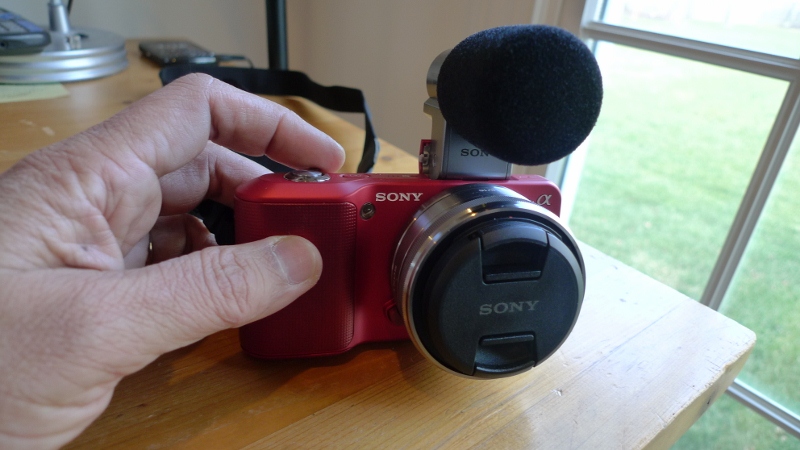
NBTMV - update on video recording setup, now with Sony Alpha NEX-3 and external mic


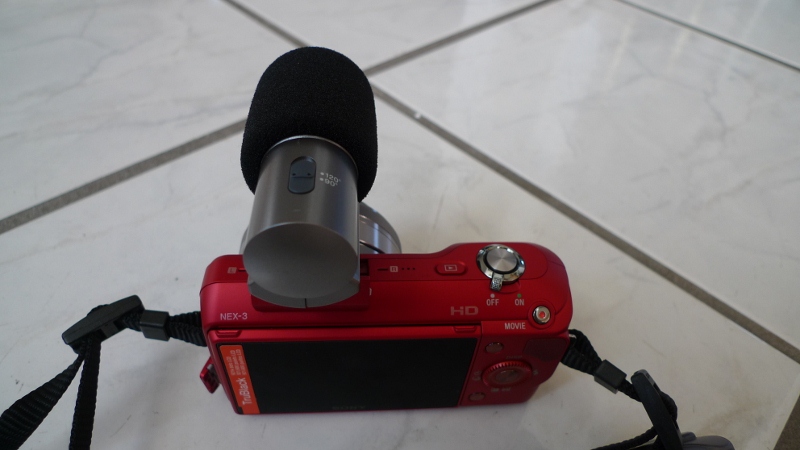
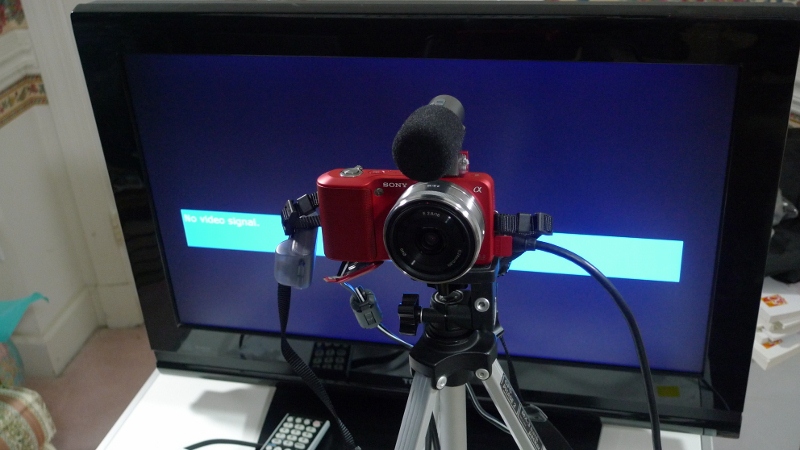
In this video I provide an update on my video recording setup at home. For the last few months, I have been using the same setup, recording the videos with a Panasonic Lumix DMC-LX3 digital camera, which has been performing very well but that it doesn’t have an external microphone input and I thought I could improve the sound quality of the video recording by using a camera with an external microphone so I began searching and I found this website called snapsort.com where you can put in various features that you want in the camera for example external microphone, low light sensitivity, a small form factor, specific price points, etc. and the site recommends cameras mathing the features you want. When I put everything I wanted, snapsort.com showed Sony Alpha NEX-3 as a top choice. I checked it out on amazon.com and they had a good price for a Sony Alpha NEX-3 with a 16mm wide-angle lens, so I bought it along with an external microphone (model Sony ECM-SST1) for recording my videos. Here are some photos of the camera and the camera on a tripod in my video recording setup.


Sony Alpha NEX-3 with external stereo microphone (front view)


Sony Alpha NEX-3 with external stereo microphone (back view)

Sony Alpha NEX-3 with ECM-SST1 external mic mounted on tripod for video recording

Other than the new camera with external microphone, the rest of the video recording setup is the same with three-point lighting system and a black muslin sheet as background.

I recorded this video with the new setup and I think it does sound better with the external microphone. You can judge for yourself by comparing this video with previous ones.
Here's some more information to help you...

Here are links to the camera and external microphone and some accessories:

Friday, January 6, 2012

NBTMV - Ideas for new year’s resolution 2012


Happy new year. I bought a Sony Alpha NEX-3 camera with an external stereo microphone and I’m recording this first video of 2012 using that camera. I hope this video sounds better than my old videos recorded without an external microphone.

It’s early enough in the new year that there’s still time for you to make some new year’s resolutions and follow through on them. Here are  three ideas for new year’s resolutions, for each of which I have videos and other information in my blog.
The first idea has to do with managing your body weight. What with all the food and celebrations during the holidays leading up to the new year, your weight and fitness must be at the top of your mind. I had taken some steps in 2003 to lose over 30 lbs by thinking of my body as a system with food and exercise as input and the weight as the output. I got good results by simultaneously changing my diet (less carbohydrate, more veggies) and increasing the level of exercise. I have more information about this in a previous video.
The second idea for new year’s resolution would be to learn a new language. With all the Spanish-speaking population here in the United States, learning to speak Spanish is an ideal choice. I took the plunge over two years ago and used a 3-step approach to start speaking Spanish -- (1) Listen and Repeat, (2) Listen and Understand, and (3) Start Speaking. You can learn more about my method from some earlier videos.  
And last, but not the least, if you are empty-nesters like us and you're considering picking up traveling abroad, then I have a number of videos where I talk about strategies for starting your world travels. I think you’ll find it worthwhile to consider starting your travels with some guided tours, followed by exploring cities on your own, and finally renting apartments in a city and doing everything on your own.
Those are some of the ideas for new year’s resolutions. I hope you pick one or more of these, consult my videos, and follow through on your new year’s resolutions. Good luck!

Thursday, December 22, 2011

NBTMV - Step 3 of Learning Spanish is to Start Speaking


As you know from my previous videos, I have been using a 3-step process for learning to speak Spanish: (1) Listen and Repeat, (2) Listen and Understand, and (3) Start Speaking (and as I have said, you also have to study vocabulary and grammar along the way).
For me, the “start speaking” step was easier said than done and it may be the same for you. Even though I gained some basic Spanish speaking capability from my “Listen and Repeat” step using the Pimsleur method, I had the usual fear of making silly mistakes if I were to speak Spanish. Also, I was not sure of many Spanish words and verbs, even though I had already completed the “Listen and Understand” step by watching a free online streaming video program called Destinos: An Introduction to Spanish and by listening to Spanish radio stations during my daily commute.
After spending about a year completing the first two steps, I researched on the Internet and found that many people take immersion classes to start speaking Spanish. After some searching, I located a well-regarded school -- Christian Spanish Academy or CSA (if I were advising them, I’d have suggested that they keep their Spanish name Academia Cristiana de Español  and abbreviate it to ACE in English :-)  in Antigua Guatemala and enrolled there for a week in early 2010. For the total cost of $400 USD, I had 8-hours of one-on-one lessons each day plus a week of home stay with a very nice host family with three meals.
CSA follows a structured program. I was given an exam and placed in Grade B (they have grades A through G). That week of immersion got me started speaking Spanish even though I still had not gone beyond the present and the past tenses for the verb conjugations. To continue building my skills, I have been taking a two-hour class every Saturday from CSA’s e-learning program via Skype. I am now in Grade C, but, even though I still have lots of grammar to learn, the week of immersion study in Antigua, Guatemala definitely helped kick-start the process of starting to speak in Spanish for me. You may want to consider something similar to get going with your “Step 3: Start Speaking” :-)

Here's some more information to help you...
For my previous videos on the 3-step method for learning Spanish and the details of the first two steps, see:


I have lots of information about books as well as photo with my host family in the blog post with an overview of the 3-step method. Here are
Naba Barkakati with Chris Morales (host)

Dinner with host family and other students (photo by Michael Herpy)

Photo by Michael Herpy - at dinner in host family's kitchen

Here are a few photos of Antigua, Guatemala (it's a very beautiful city):
Antgua - near the central park

Antigua - around central park

View of Antigua from a hill nearby
Volcan Fuego near Antigua, Guatemala
Update (2014)
My wife decided to learn Spanish as well and we both went back to the Christian Spanish Academy in February 2014 for a week of lesson. I have been continuing my lessons online through their elearn pogram and my wife has started the lessons as well. I can speak Spanish fairly well, as evidenced by this toast in Spanish at my daughter's wedding in Barcelona:

Here are some photos from our recent visit to the school:
At the entrance to the school
View on entering school
With Angélica

Inside the school courtyard

My wife with teacher Viki

My teacher Merly Guzmán

Classroom in open courtyard

With Nestor and Carlos (elearn program)
Anabela Ponce


Wednesday, December 14, 2011

NBTMV - On the need to assess impact of technology before adopting it


It’s important to assess the impact of technology before using it either in a product or for your or your organization’s use (for that matter, for the nation’s use as well).
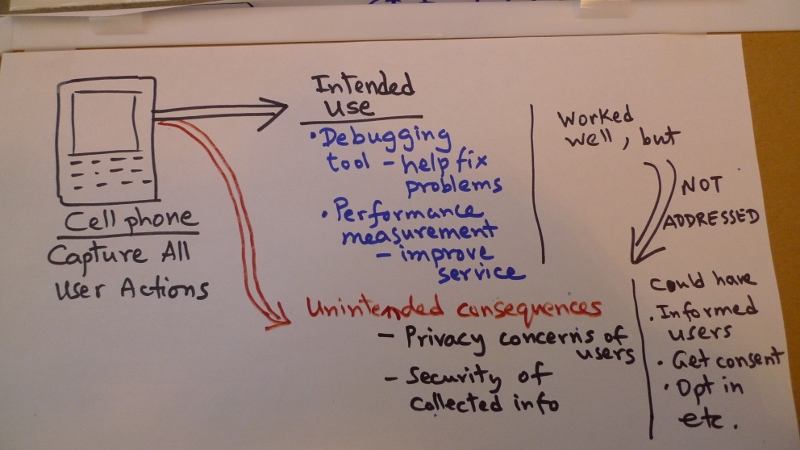
Let’s start with an example. Suppose you are a cell phone manufacturer and you decide to capture all user actions so that you can “debug” -- fix problems -- when something goes wrong and also improve performance when you see some parts of the system not performing to expectation. Capturing user actions is a perfectly valid approach to this need, but, if you did not inform the users upfront, they’d probably be concerned about privacy and security of the collected information.
As another example, suppose we promote production of ethanol from corn as a fuel and as a way to reduce dependence on fossil fuel. However, corn is also used as food and as cattle feed. What if there is impact on food prices and cattle feed because corn is diverted from these uses to ethanol production.
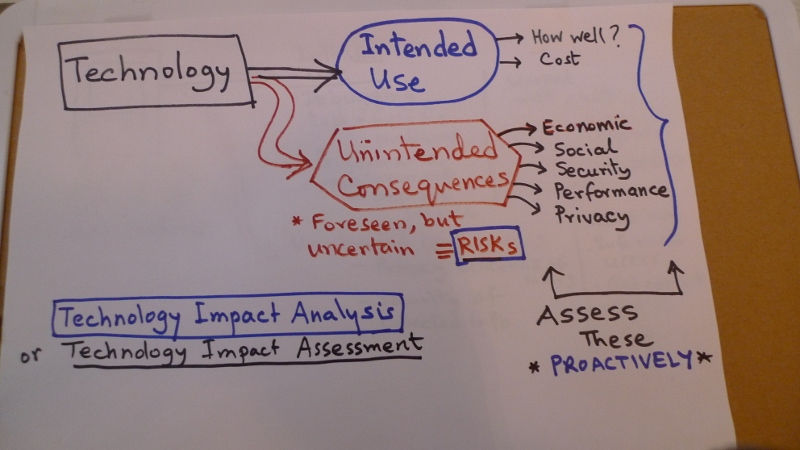
One way to avoid such problems is to conduct a technology impact analysis (or technology impact assessment) up front. The framework is fairly straightforward. You consider the technology for some intended use. Now, before you adopt the technology, think of all the unintended consequences, which are usually not good. These are foreseen, but uncertain, and, therefore, “risks.” If you think of them up front, you can then take action to either mitigate these risks or decide to accept them.
In the case of the cell phone example, if this was done, the cell phone manufacturer could have foreseen the privacy and security risks and acted beforehand by informing the users about the intended use of the information being captured and letting them opt in, if they so desired.
In summary, it’s important to assess the impact of technology before deciding to incorporate it in a product or adopting it for your or your organization’s use. Proactively doing an impact assessment could save you lots of headaches and, not to mention, potential negative consequences later on.
Here's some more information to help you...
The following book covers similar ideas and may be interesting to check out:

Monday, December 12, 2011

NBTMV - Step 2 in learning Spanish is to Listen and Understand


I have been using a 3-step process for learning to speak Spanish: (1) Listen and Repeat, (2) Listen and Understand, and (3) Start Speaking (of course, you also have to study vocabulary and grammar along the way). For the Listen and Repeat step, if you use the Pimsleur method, as I did, then you’d have already learned the basics -- Spanish pronunciation, alphabet, numbers, days of the week, and so on and you would be speaking some Spanish already.
However to get ready for conversations in Spanish, you need to complete the next step -- Listen and Understand Spanish so that you can understand when someone talks to you. I started this second step by watching a free online streaming video program called Destinos: An Introduction to Spanish that’s essentially a telenovela with 52 episodes, each 30 minutes long. I watched all 52 episodes twice and only then I could begin to understand them comfortably.
Next, I began listening to a local Spanish radio station on my commute to work. And, when possible, began watching TV programs on Telemundo or Univision.
When you first begin listening with the intention of trying to understand, you’ll found it difficult to keep up, as I did, but just keep at it and slowly you’ll begin to understand more. Although the basics you learned in Step 1 should get you going, you should also study some vocabulary on the side. I read Mastering Spanish Vocabulary to expand my vocabulary. That attempt also got me started with reading Spanish and I realized how easy it is to read in Spanish -- you just say words as they are written (you know what I mean if you try to read Fench :-)
By now, I can speak some Spanish, but I still have more grammar to learn and, even now, I cannot fully follow along when people speak fast on the radio. But the main point is that by first devoting time to listening and repeating and then spending tons of time listening and understanding, I was able to get to the point where I could begin speaking Spanish. I’m sure you can do the same with my method for learning to speak Spanish.
Here's some more information to help you...
For my previous videos on the 3-step method for learning Spanish and the details of the first step, see:


To watch the Destinos streaming video, visit the Annenburg Media web page at: http://learner.org/resources/series75.html and click the VoD (video on demand) link to the right of an episode. 
Here's the vocabulary book I found useful: